Picual
The most planted olive in the world and the backbone of Andalusian oil. Naturally rich in oleic acid and polyphenols, which makes it both the most stable extra virgin on the shelf and the most assertive on the palate.
In the grove
Picual takes its name from the small point at the tip of the fruit. It tolerates cold, drought and limestone soils, which is why it dominates Jaén, where a single province holds more olive trees than any country outside Spain. Yield is high and ripening is late, so growers who want the green style must pick well before the fruit turns.
The trade-off is real: an early October pick can cost a third of the yield of a November one. What it buys is chlorophyll, bitterness and a phenolic load that keeps the oil alive for two years instead of one.
Compared with the other reference cultivars
| Cultivar | Origin | Typical polyphenols | Sensory profile | Best pairing |
|---|---|---|---|---|
| Picual | Jaén, Spain | 500–800+ mg/kg | Green tomato skin, cut grass, high bitterness and pungency | Grilled meat, charcuterie |
| Coratina | Puglia, Italy | 600–1000+ mg/kg | Artichoke, rocket, intense peppery pungency | Legume soups, roast beef |
| Koroneiki | Crete & the Peloponnese | 350–600 mg/kg | Fresh apple, green banana, balanced herbaceous notes | Salads, grilled fish |
| Arbequina | Catalonia & Andalusia | 150–300 mg/kg | Sweet apple, green almond, very light bitterness | Seafood, desserts, light sauces |
Polyphenol figures are the ranges published for each variety, not measurements of any bottle in the library. A single oil's figure depends on when it was picked and how it was milled, and is shown on that oil's own page where the producer states one.
Picual oils in the library
From 13 producers in 2 regions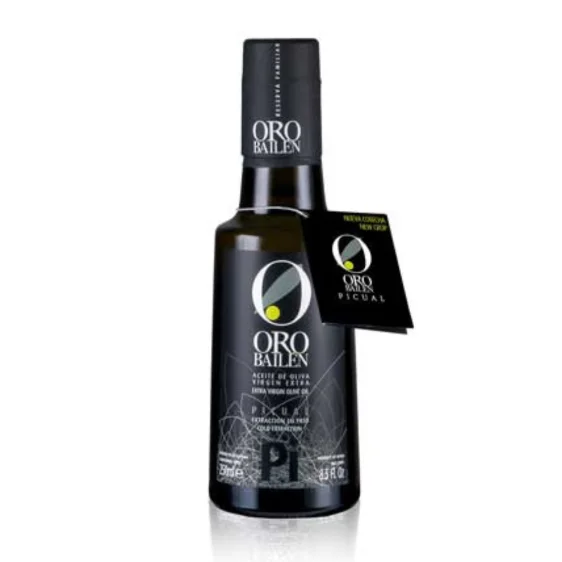 In our shop