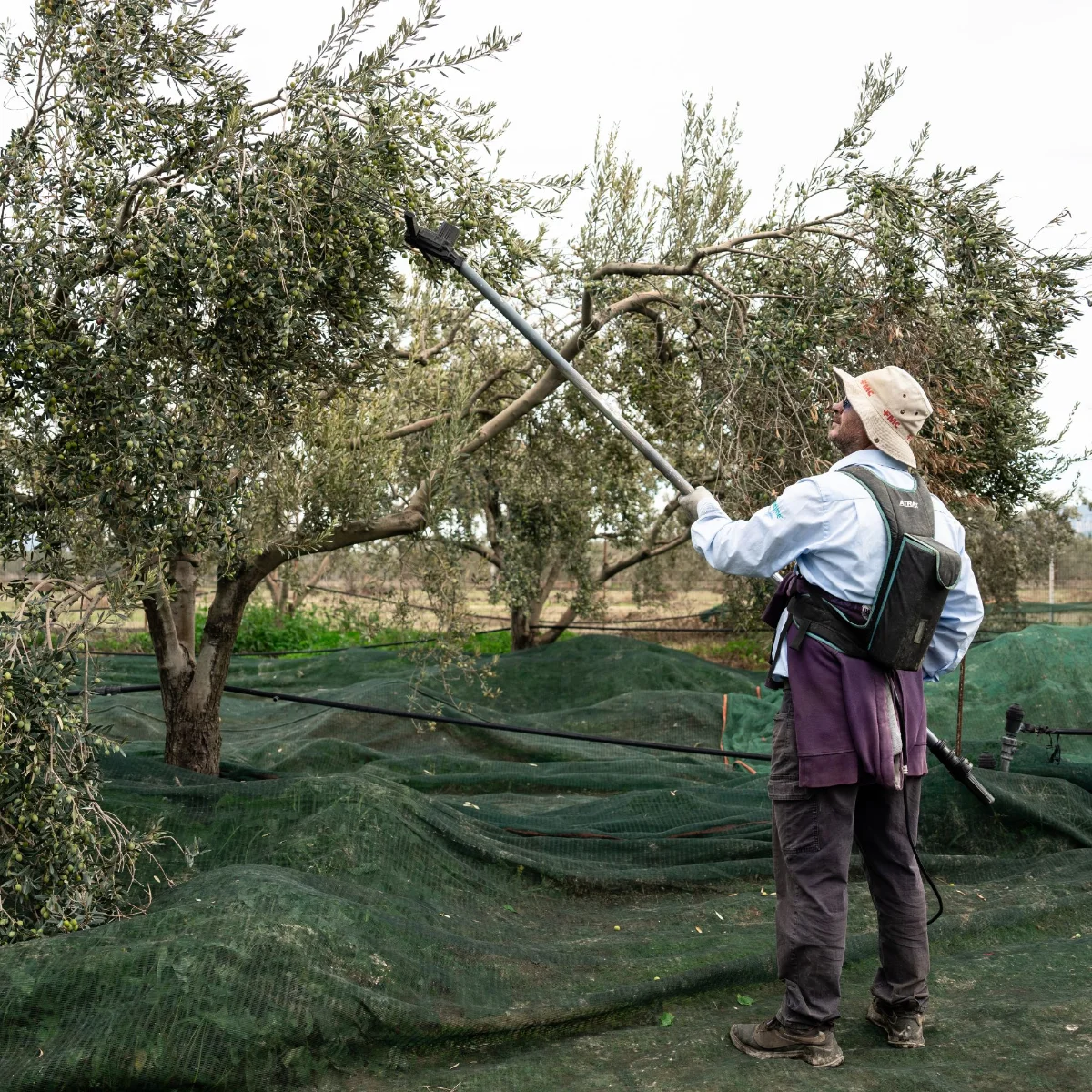
1. The trade
An olive’s oil content rises through the autumn as the fruit ripens from green to purple to black. Pick in September or early October and the fruit yields perhaps 10–14% oil by weight; wait until December and it gives 20–25%. The grower who picks early is giving up a third to a half of the crop. What the green fruit has instead is polyphenols — two to three times the ripe fruit’s level — chlorophyll, and the volatile aromas that make an oil smell of cut grass and tomato leaf rather than ripe fruit and butter.
That is the whole economics of early harvest. The oil costs more because there is less of it, and it is worth more because it tastes more and lasts longer. Every high-phenolic oil, every competition Gold and nearly every oil in this library with a figure above 500 mg/kg was picked early.
2. What you taste
| Early harvest (green) | Main harvest (turning) | Late harvest (ripe) | |
|---|---|---|---|
| Colour | Intense green | Green-gold | Gold |
| Aroma | Cut grass, tomato leaf, artichoke, green almond | Green and ripe fruit together | Ripe fruit, banana, butter |
| Bitterness and pungency | High | Medium | Low |
| Polyphenols | Highest | Medium | Lowest |
| Shelf life | Longest | Medium | Shortest |
| Yield to the grower | Lowest | Medium | Highest |
The same tree, three picking dates. Taste and keeping quality move one way; yield moves the other.
Early oils divide people. The bitterness that a panel scores as a positive attribute reads to some palates as harsh, and a very early Coratina or Picual is not an oil for poaching fish. Used raw where the food can stand up to it — bread, pulses, grilled meat, bitter greens — it is the most olive an olive oil can taste.
3. The words on the bottle
Italian olio nuovo or novello is the first oil of the season, usually unfiltered, sold from October to Christmas and meant to be finished by spring. Greek agourelaio — “unripe oil” — is early-picked oil from green fruit, filtered or not, and is used on labels in the Peloponnese and on Crete; Chalkidiki has a PDO for it. Spanish cosecha temprana, “early harvest”, is now on most premium Andalusian labels and usually means October picking of Picual or Hojiblanca. Turkish erken hasat is the same idea on the Aegean coast, where Hermus and Nermin Hanım pick in September. None of the four has a legal definition; all of them mean what the producer says they mean, which is why the harvest date matters more than the word.
Four words, no legal definition. The harvest date is the definition.
4. Filtered or unfiltered
Fresh from the separator, oil carries suspended water and fruit particles that make it cloudy. Filtering removes them; leaving them gives olio nuovo its texture and a slightly fuller taste for the first weeks, at a price — the water keeps hydrolysis and fermentation going, so an unfiltered oil loses freshness faster and its acidity creeps up. Sediment at the bottom of a bottle is harmless, but it is also where the oil ages first. Buy unfiltered oil to drink now; buy filtered oil to keep.
5. When to buy and how long to keep
The new season’s early oils reach shops from late October (Crete, Türkiye, Puglia) through November (Andalusia, Tuscany). Buy them then — that is when the gap between an early oil and an ordinary one is widest. A filtered early oil with a high polyphenol count will still be good eighteen months on if kept dark and cool; an unfiltered one is at its best for three to four months and fine for six. Either way, the clock runs from the harvest, not from the day you open the bottle.