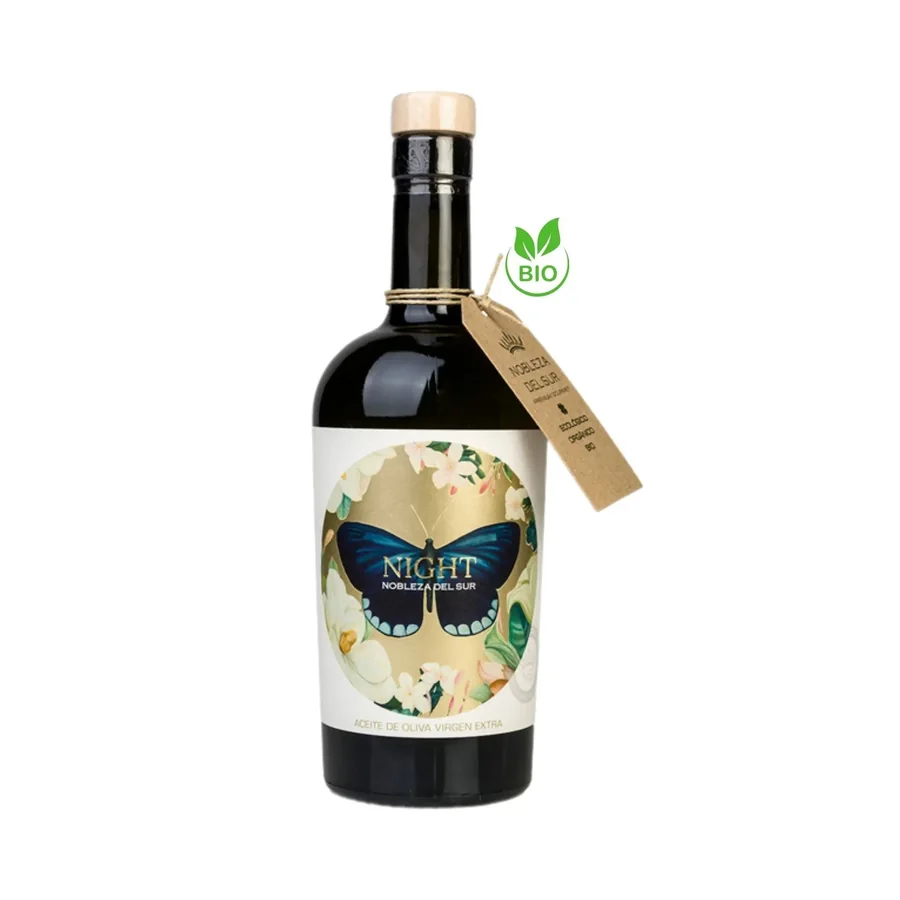
The softer half of the estate's organic pair, and the only blend among them: Arbequina supplies the fruit and the almond, Picual the herbal edge and a light pepper at the close. The moth on the label stands for the nocturnal pollinators the groves are farmed to keep. At 373 mg/kg it still clears the EU health-claim threshold of 250 comfortably, but it drinks like an everyday oil, which is precisely its brief.
Tasting notes
Median of the panel, IOC scale 0–10
Fruity
ripe — almond, apple, herbs
Bitter
gentle, short
Pungent
a light lift at the end
Where Eco Day is green fruity, this leans ripe: sweet almond, ripe apple and a touch of stone fruit from the Arbequina, with the Picual showing as a fresh herbal thread and a subtle pepper on the finish. Round and low in bitterness, with modest persistence. A coupage built to be liked rather than to be admired, and honest about it — the two varieties are legible in the glass instead of muddied together.
The facts
Cultivar
Picual and Arbequina (coupage)
Harvest
October 2025, early
Polyphenols
373 mg/kg (producer lab report, 2025/26)
Free acidity
0.10%
Extraction
Cold, within 4 hours of picking
Certification
EU Organic
Awards
Where it's from
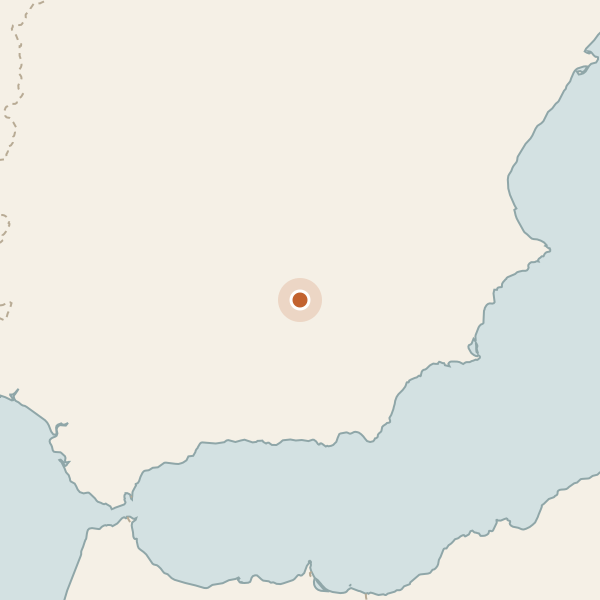
The same organic groves as Eco Day, in eastern Jaén, managed to protect the night-flying pollinators pictured on the label.
What has been measured on this oil, and who measured it
Total polyphenols
373mg/kg
The EU 432/2012 antioxidant claim starts at 250 mg/kgSource: producer lab report, 2025/26
Free acidity
0.1%
Extra virgin is capped at 0.80% — lower means fresher fruit
EU 432/ 2012
Qualifies for the EU antioxidant health claim
At 373 mg/kg this oil is above the 250 mg/kg threshold Regulation 432/2012 sets for hydroxytyrosol and its derivatives, as reported by the producer lab report, 2025/26.
Pairs well with
SaladsSteamed vegetablesPastaLight fryingBaking
Reviews
1 expert
P
Tasting panel · bestoliveoils.euPanel note · September 2026
Panel pick★★★★☆Rated 4.4 out of 5
A well-judged blend rather than a compromise, and a useful one. If Eco Day is too green for the people you cook for — and in many households it is — this is the same estate, the same organic groves and the same four-hour milling, simply built for the middle of the table. It is also the better of the two for cooking, since you are not burning off 690 mg/kg of phenolics you paid a premium for. Do not expect complexity: this is a harmonious, mild, correct oil, and being deliberately unremarkable is the job it was given.